Skip to content
What should a KLOW peptide COA tell you?
A KLOW peptide certificate of analysis (COA) records test results for a particular sample. The product and lot identify what was tested; the methods, units and results explain what the laboratory found.
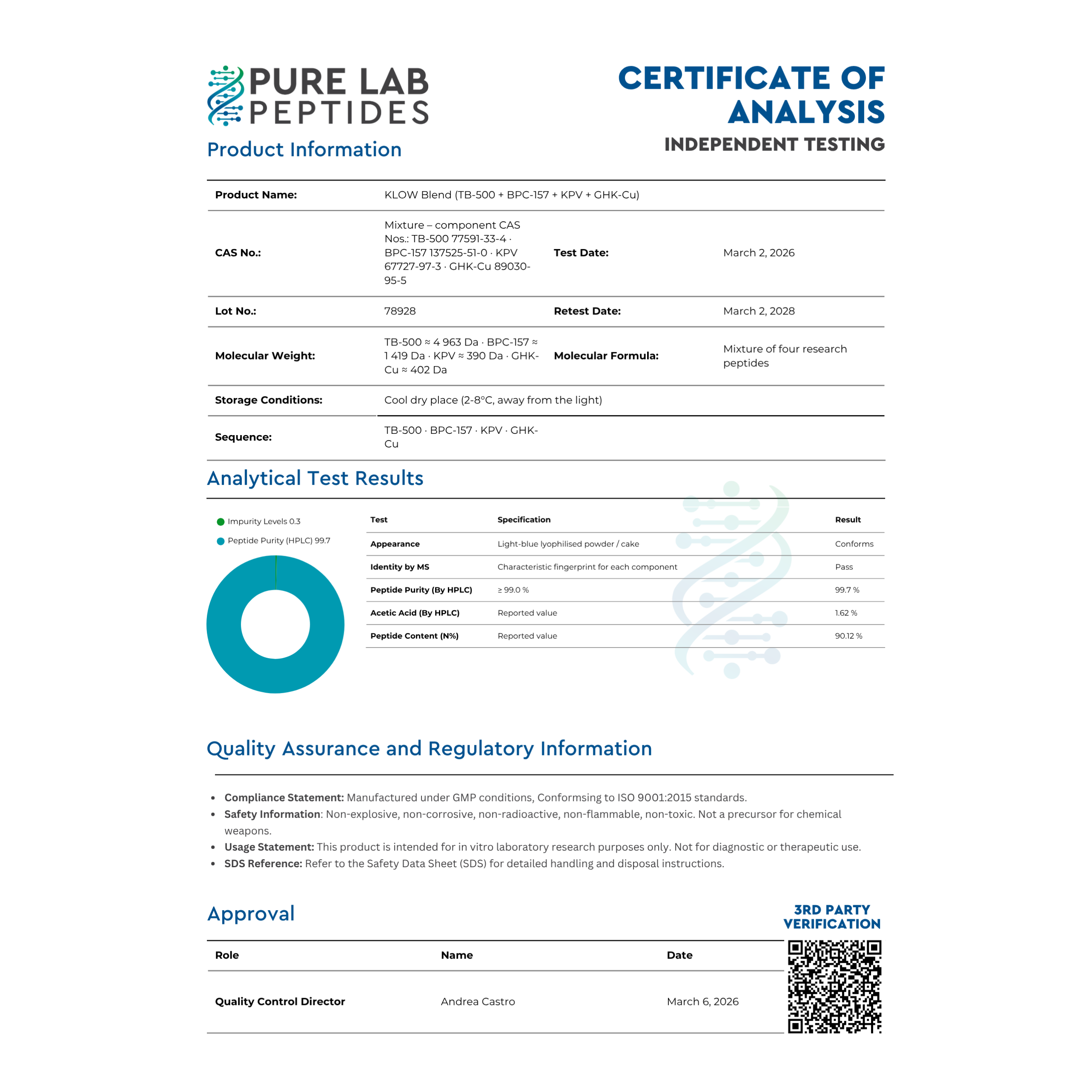
This walkthrough uses selected fields from Pure Lab Peptides’ published certificate for KLOW lot 78928, inspected on September 9, 2026. It reports 99.7% HPLC purity and an identity-test pass.1
What does the example certificate report?
| Field | Reported value | Meaning |
|---|---|---|
| Product and lot | KLOW blend, lot 78928. | The product and batch identifiers associated with the reported sample. |
| Analysis date | March 2, 2026. | The recorded date of analysis. |
| Retest date | March 2, 2028. | The stated date for reassessing the material. |
| Identity by MS | Pass, with a component-fingerprint statement. | The reported outcome of the mass-spectrometry identity test. |
| HPLC purity | 99.7%. | The reported chromatographic purity under the stated method. |
| Acetic acid | 1.62% by HPLC. | A separate analytical result for acetic acid. |
You can view the certificate in the Pure Lab Peptides KLOW product gallery.3
How should you interpret the 99.7% HPLC result?
The reported 99.7% purity exceeds the listing’s ≥99% specification.13 HPLC, or high-performance liquid chromatography, separates sample components and records detector responses. The percentage is calculated according to the laboratory’s method.
The identity row answers a different question. MS stands for mass spectrometry; the reported “Pass” means the sample met the stated requirement for that identity test. Purity describes the material under its analytical method, while quantitative content testing measures an amount of a specified substance.2
For example, the 50 mg of GHK-Cu on a KLOW label is an ingredient amount, not a purity percentage. The KLOW ingredient guide shows all four listed amounts and how they add up to 80 mg.
The acetic-acid entry is a separate result: 1.62% by HPLC. Its calculation basis determines what that percentage represents. Read it in the reported units; it is not a number to subtract from the 99.7% purity result.
How do you connect the report to the right batch?
Use the lot number. In this example, 78928 identifies the batch covered by the certificate. Keep the report with the matching material’s records, including its analysis and retest dates. The retest date is the stated point for reassessing the material; it is separate from the date the analysis was performed.
Pure Lab Peptides describes the final product-gallery image as its COA summary, with a QR code or link to the original third-party report.3 The KLOW buying guide explains report access and the separate Certificate of Authenticity used to verify an order.
Sources
Wording reviewed September 11, 2026. Certificate values were recorded during the September 9 inspection, and the listing was rechecked September 10. This walkthrough explains the published document and its selected results.
- Pure Lab Peptides, published KLOW certificate image, lot 78928. Viewed September 9, 2026. Published supplier certificate used as a document example.
- McCarthy D, et al. Reference Standards to Support Quality of Synthetic Peptide Therapeutics. Pharmaceutical Research. 2023;40(6):1317–1328. doi:10.1007/s11095-023-03493-1.
- Pure Lab Peptides, KLOW 80 mg product listing. Formula and commercial record checked September 9, 2026.